From Chef Devin Dedier · El Dorado Hills
There's a line we come back to in our kitchen all the time: nobody's grandmother ever made a second lasagna just in case. We cook the way she did: once, in the morning, in the amount we can do properly. When it's gone, it's gone. That is not a marketing position. It is how a real scratch kitchen actually runs.
Nobody's grandmother ever made a second lasagna just in case.
Our pasta is made in-house, by hand, every morning. So are our focaccia, our sauces, our meatballs, and our fennel sausage. It would be easier and cheaper to open a case of dried pasta, and we don't, because the whole point of Roman cooking is a few great ingredients handled with care, and pasta is the first of those ingredients.
Fresh vs. extruded
"Handmade pasta" covers two different crafts, and a good kitchen does both.
- Fresh, rolled pasta is a soft dough (flour and egg) rolled into sheets and cut or filled. This is the tender side of the family: ribbons like tagliolini and fettuccine, filled shapes like agnolotti and cappellacci. It cooks in a minute or two and drinks up delicate sauces.
- Extruded pasta is a firmer dough pushed through a die under pressure, which gives it chew and a rough, porous surface. This is the sturdy side: tubes like rigatoni, strands like bucatini. That texture is built to grab heartier sauces and hold them.
We make both, because the shape is not decoration. It's engineering.
Flour from Italy
Good pasta starts upstream of the kitchen, at the flour. Ours comes from Italy, where flour is held to a stricter standard than the commodity flour sitting on most American shelves. We pay more for it, on purpose, and the difference shows up in the chew and the flavor and in how the dough behaves under the pin. We wrote the long version of why in the journal: the piece on flour and gluten. The short version: it's just wheat, the way wheat has been wheat for nine thousand years.
Why each sauce gets its shape
Rome didn't assign shapes to sauces by accident. The pairing is about how sauce and pasta meet:
- Rigatoni for our carbonara: the ridges and the open tube catch and hold a clinging egg-and-cheese sauce.
- Tonnarelli for our cacio e pepe: a rough, square-cut strand that the emulsion grips all the way along.
- Spaghetti for amatriciana: a clean strand for a bright, tomato-and-guanciale sauce.
- Filled shapes: agnolotti di brasato, cappellacci di zucca, where the pasta is the wrapper and the filling is the sauce.
- Bucatini for bucatini e polpette, tagliolini for tagliolini alle vongole, each strand chosen for the weight of what it carries.
Match the shape to the sauce and every bite carries the right ratio. That's the quiet logic under a plate of Roman pasta.
Come watch it happen
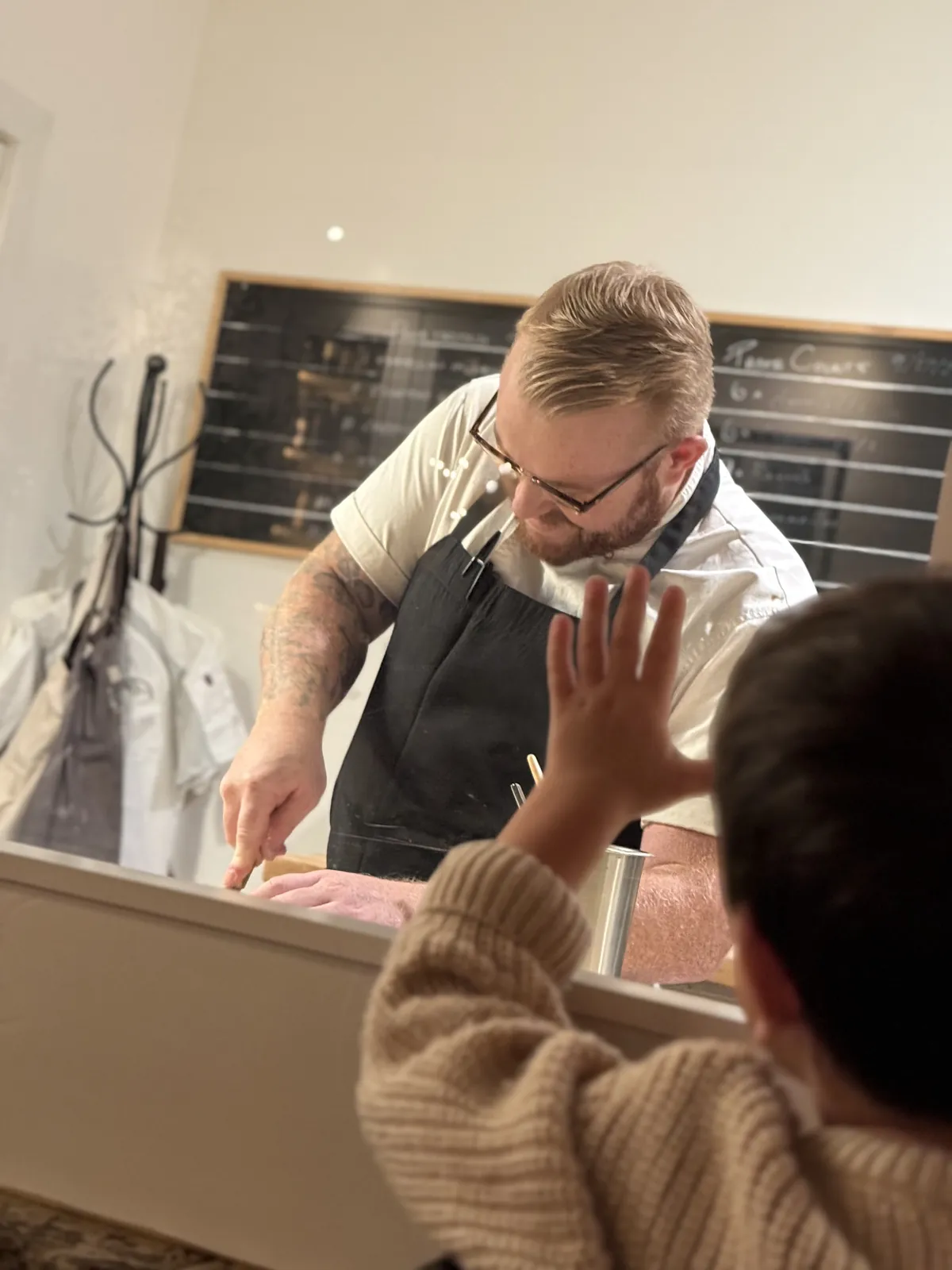
Because the pasta is rolled by hand each morning, a visit here isn't only dinner: on a good day you can watch it being made. One of our favorite photographs is of a kid at the counter, chin on the edge, watching the dough go through the rollers. That's the restaurant we wanted to build.
Once, in the morning.
In the amount we can do properly.
This is the scratch kitchen behind the four Roman pastas and the rest of the card. If you want the bigger picture, start with what Roman cooking actually is, or just come sit down.
Questions
Is the pasta really made in-house?
Yes. We're a true scratch kitchen. Our pasta (fresh, rolled, and extruded) is made in-house and rolled by hand every morning, along with our focaccia, sauces, meatballs, and fennel sausage.
What's the difference between fresh and extruded pasta?
Fresh pasta is a soft egg-and-flour dough rolled into sheets and cut: tender ribbons and filled shapes. Extruded pasta is a firmer dough pushed through a die into tubes and strands, with a chew and a rough surface that grips heartier sauces. We make both.
Where does your flour come from?
Italy. We explain why in the journal piece on flour and gluten.
Can I watch the pasta being made?
Often, yes. It's rolled by hand each morning in our El Dorado Hills kitchen, and it's part of what makes a visit worth lingering over.